

SADI-S combines a sleeve gastrectomy with a connection between the duodenum and a more distal part of the small intestine. It preserves the pylorus and changes the route taken by food and where it meets digestive juices. Choosing this operation involves considering the degree of obesity, associated conditions, previous operations and the ability to maintain nutritional follow-up.
In this article
- What it involves
- Results and limitations
- Differences from sleeve gastrectomy and gastric bypass
- Risks and follow-up
What does SADI-S involve?
The name stands for single-anastomosis duodeno-ileal bypass with sleeve gastrectomy. The operation combines two components:
- Sleeve gastrectomy: reduces the stomach's volume while preserving its natural outlet through the pylorus.
- Duodeno-ileal bypass: connects the duodenum to the ileum through an anastomosis. Food passes through a shorter length of intestine before digestion and absorption are completed.
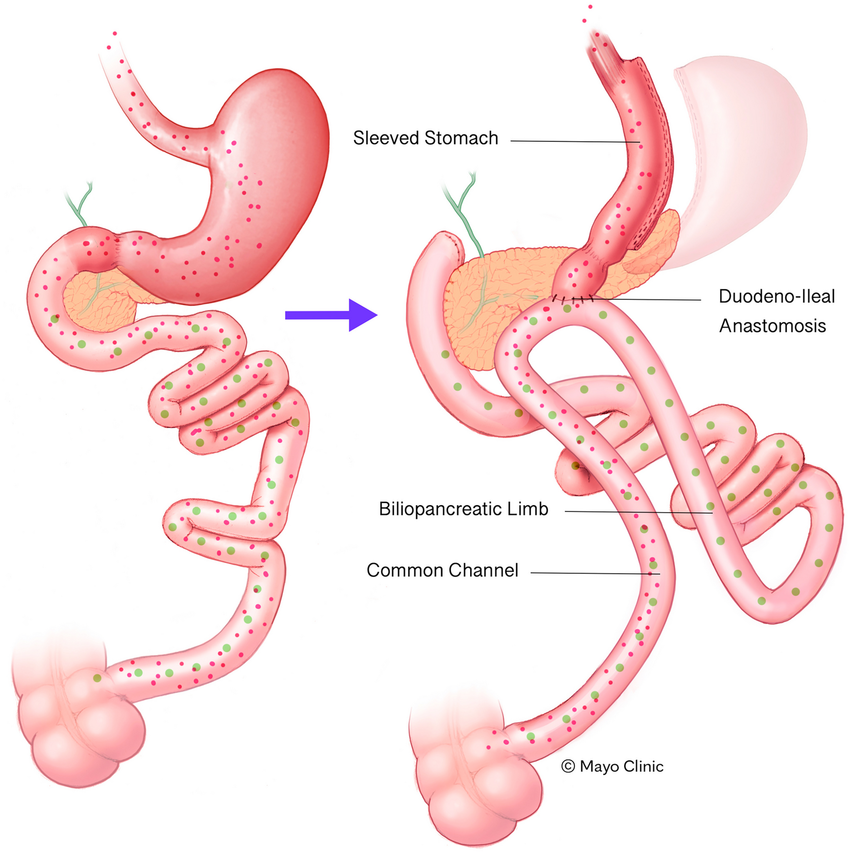
This digestive change influences the amount of food eaten, absorption and the metabolic response. Describing it simply as “eating less” leaves out an important part of the treatment.
What do the results show, and how should they be interpreted?
Follow-up studies show sustained weight loss and metabolic improvement. These results describe groups of patients: they cannot promise an individual outcome or establish that SADI-S is the best option for everyone.
When reading a study, it is helpful to distinguish total weight loss from excess weight loss, check how many years patients were followed and how many completed that follow-up. A single percentage does not describe the whole outcome of an operation.
The long-term follow-up series by Sánchez-Pernaute and colleagues describes sustained benefits as well as revisional surgery for hypoproteinaemia. Both aspects help explain the balance between metabolic effects and nutritional demands.
Differences from sleeve gastrectomy and gastric bypass
- Sleeve gastrectomy: changes the stomach without an intestinal bypass. It affects fullness and metabolism and may cause or worsen reflux.
- Roux-en-Y gastric bypass: creates a gastric pouch and changes intestinal transit through a Y-shaped reconstruction. Its anatomy and follow-up requirements are different.
- SADI-S: retains a sleeve and the pylorus, with a duodeno-ileal connection. Its malabsorptive component requires particular attention to protein, vitamins and minerals.
Preserving the pylorus does not remove these requirements or, by itself, demonstrate better absorption of iron and calcium. A single anastomosis does not mean that complications cannot occur.
In which situations is it considered?
It may be considered for people with a high degree of obesity or significant metabolic disease, and as a second-stage or revisional procedure after sleeve gastrectomy. Wanting to lose more weight is not enough to select the procedure: medical history and alternatives must be reviewed.
The SADI-S clinical page provides more information about assessment. This article explains the procedure and its differences, without turning a general description into an indication for surgery.
Risks and nutritional follow-up
The operation has surgical risks, such as bleeding or leakage at the surgical joins. It may also change bowel habits. Ongoing follow-up is therefore part of treatment.
Its malabsorptive component requires attention to protein intake and vitamin and mineral deficiencies. Nutritional complications may require treatment and, occasionally, revisional surgery. Persistent diarrhoea, marked weakness, oedema or difficulty eating require specialist review. The frequency of checks is adapted to each person and may be greater than after other procedures.
Reviews assess diet, digestive symptoms, weight and blood test results. Supplementation after bariatric surgery must continue and be adjusted to the procedure and your progress.
Sources
- ASMBS: bariatric surgery procedures.
- Sánchez-Pernaute and colleagues: long-term SADI-S outcomes, 2022.
Book an appointment with Dr. Pablo Aragó
Book an appointment at your preferred IMED centre: Valencia (Burjassot), Colón or Gandía.
In the portal, select Cirugía General y del Aparato Digestivo (General and Digestive Surgery) and Dr. Pablo Aragó Chofre. If you need help or cannot find his appointments, see the telephone numbers and locations of the three centres.
Request an appointment at IMED
The button opens IMED's external service, which has its own terms and privacy policy. Appointments are subject to confirmation by the centre. Do not use this channel for emergencies.
IMED Valencia
Av. de la Ilustración, 1, 46100, Burjassot. Valencia
IMED Colón
C/ Isabel La Católica, 12. 46004 València
IMED Gandía
Carrer Ciutat de Barcelona, 29. 46702 Gandia, Valencia
https://www.instagram.com/drpauarago/
Medical review of the Spanish source: Dr. Pablo Aragó Chofre, specialist in General and Digestive Surgery. Spanish source review date: 11 November 2026. General information for patients; assessment and indications are individualised during consultation.