

Obesity is a complex chronic disease affecting many people worldwide and in Spain, including the Valencian Community. Beyond appearance, it is a major public health problem associated with several serious illnesses. When diet and exercise fall short of achieving substantial, lasting weight loss, bariatric surgery is a highly effective treatment option. Among the procedures, gastric bypass is one of the most effective. But how exactly does it work, and what can it offer you? If you are considering obesity surgery and looking for a bariatric surgeon in Valencia, this article is for you.
Gastric bypass explained: its mechanism of action in detail
How exactly does gastric bypass work? The dual mechanism
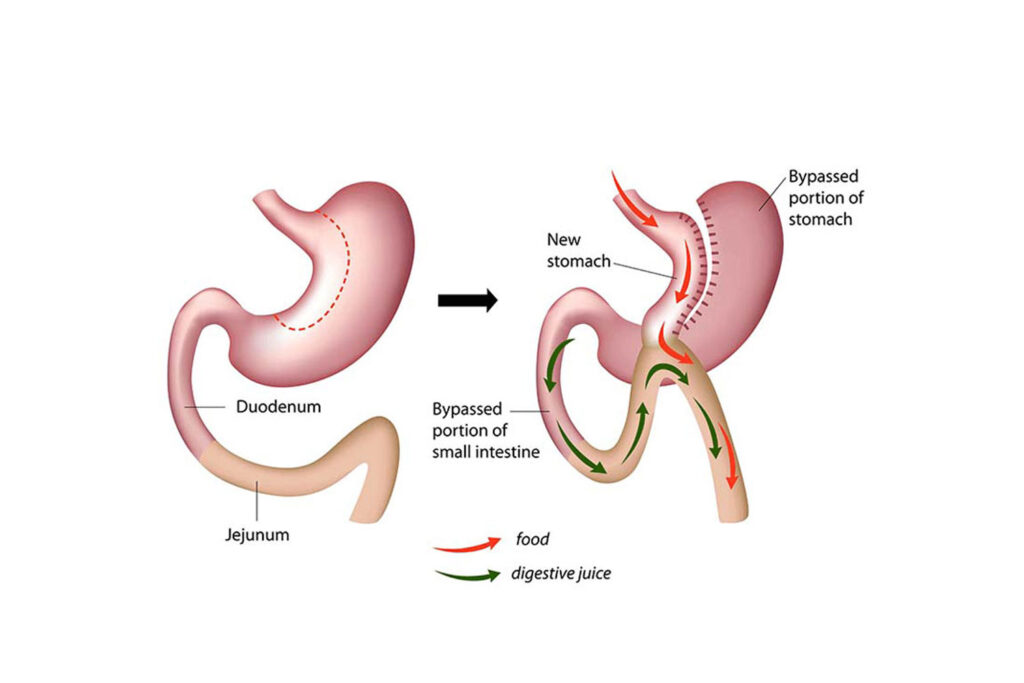
Roux-en-Y gastric bypass creates a small pouch and changes the intestinal route. As well as reducing intake and changing the absorption of some nutrients, it alters hormonal and metabolic signals relevant to fullness and blood glucose control.
Step by step: the gastric bypass operation
Gastric bypass is usually performed laparoscopically and can also be carried out with robotic assistance. In certain situations, an open approach may be necessary. The route of access is chosen according to anatomy, previous history and the safety of the operation.
Reducing the stomach's size: the restrictive component
The surgeon creates a small gastric pouch, approximately 20–30 ml in volume. Special staples separate it from the rest of the stomach. This becomes the new space into which food enters.
Rerouting the intestine: the malabsorptive component
The small intestine is divided and one of its loops is connected to the gastric pouch. Another intestinal connection allows food to meet bile and pancreatic secretions further along, forming the Y-shaped reconstruction. The intestine excluded from the passage of food is not removed.
Key benefits of gastric bypass: beyond weight loss
Significant, sustained weight loss: changing lives
Gastric bypass can produce substantial, sustained weight loss, but the amount and course vary from person to person. Weight regain can also occur, even with follow-up. Results should be interpreted according to the procedure, starting circumstances and time elapsed.
Resolution or improvement of comorbidities: type 2 diabetes, high blood pressure and more
Gastric bypass may improve type 2 diabetes, high blood pressure, blood lipids and sleep apnoea. In some people, it also helps control reflux. A response is not guaranteed, and any medication changes must be made under medical supervision.
A positive impact on quality of life, mobility and emotional wellbeing
Mobility and quality of life may improve after surgery, although the outcome differs for each person. Emotional progress also varies, and psychological difficulties deserve specific attention.
Other benefits associated with obesity surgery
Some people experience less joint pain or changes in fertility. Follow-up studies have found associations with a lower risk of certain cardiovascular diseases and some cancers, but surgery does not eliminate these risks or replace prevention and screening measures.
Gastric bypass versus sleeve gastrectomy: comparison and individual choice
Main differences between gastric bypass and sleeve gastrectomy
Both gastric bypass and sleeve gastrectomy are good bariatric surgery options, but they are not the same. Each has its own features:
- Mechanism: both procedures change gastric capacity and metabolic signals; bypass adds an intestinal rerouting component.
- Complexity: gastric bypass is a more complex operation.
- Metabolic results: bypass usually produces greater improvement in type 2 diabetes and gastro-oesophageal reflux.
- Supplementation: both bypass and sleeve gastrectomy require nutritional checks and supplements adapted to the procedure and blood test results. It should not be assumed that everyone with a sleeve needs a lower dose.
Who is an ideal candidate for gastric bypass? Factors to consider
Gastric bypass may be considered for patients who meet the criteria for bariatric surgery, particularly if they have type 2 diabetes or significant reflux. It is not limited to a BMI above 45–50. The choice requires an assessment of risks, previous history and alternatives.
Risks and follow-up: bleeding, leaks, infection or thrombosis may occur, as can late complications such as marginal ulcers, internal hernias, dumping syndrome, hypoglycaemia and nutritional deficiencies. Follow-up and supplements are adapted to each case. Severe or persistent abdominal pain requires urgent assessment, even years after the operation.
Your journey towards health in Valencia: choosing your bariatric surgeon at IMED
Why are the surgeon's experience and the multidisciplinary team crucial?
Bariatric surgery involves much more than the operation itself. It is a long-term process that needs an experienced surgeon and a supporting team — endocrinologists, nutritionists, psychologists and others — before, during and, above all, afterwards. The experience of the bariatric surgeon and the team is fundamental to a safe operation and lasting results.
The consultation process at IMED Valencia: your first step towards change
If you live in the Valencian Community and are considering obesity surgery, the first step is to come and find out more. At our IMED Valencia consultation, we will carry out a full assessment so that you understand what is involved. We will listen to your questions and concerns, review your health and explain the available options, including gastric bypass and sleeve gastrectomy.
Related video
This content is hosted on YouTube. The player remains disabled until you choose to load it.
When you enable it, YouTube receives connection data and may use cookies or similar technologies to provide the service, measure its use and personalise content or advertising. Read YouTube's privacy information.
- Accept and load YouTube
- Keep disabled
- Disable YouTube
Open on YouTube (external site)
Your choice is not saved. Until you enable it, this block does not load resources from the provider.
You can use the external link to access the content.
IMED Valencia
Av. de la Ilustración, 1, 46100, Burjassot. Valencia
IMED Colón
C/ Isabel La Católica, 12. 46004 València
IMED Gandía
Carrer Ciutat de Barcelona, 29. 46702 Gandia, Valencia
https://www.instagram.com/drpauarago/
Medical review of the Spanish source: Dr. Pablo Aragó Chofre, specialist in General and Digestive Surgery. Spanish source review date: 11 November 2026. General information for patients; assessment and indications are individualised during consultation.
Medical sources: ASMBS: bariatric surgery procedures.