

Published: 26 February 2025.
Bariatric surgery is an effective procedure for weight loss and improving health in people with severe obesity. However, its long-term success depends to a large extent on changes in eating habits. The postoperative diet is fundamental to supporting an appropriate recovery and maintaining the results achieved. In this article, we will explore the different stages of eating after bariatric surgery, which foods to consume and how to adapt to a new way of eating.
The importance of the postoperative diet
After bariatric surgery, the digestive system is recovering and needs a carefully structured eating plan. A well-planned postoperative diet helps to:
- Support healing and avoid complications.
- Help the digestive system adapt to a smaller stomach capacity.
- Prevent nutritional deficiencies.
- Maintain weight loss in a healthy way.
- Establish sustainable long-term eating habits.

Stages of the postoperative diet
The timings of the following stages are a guide. Progression depends on the instructions given by your team, your operation and your tolerance; you should not move to a different texture simply because a particular week has been reached.
The postoperative diet after bariatric surgery is divided into progressive stages to allow the digestive system to adapt gradually.
1. Liquid stage: 0–2 weeks
In this first stage, the aim is to maintain adequate hydration and provide essential nutrients without causing discomfort in the digestive tract.
Permitted foods:
- Clear broths: chicken, beef, fish or vegetable, with the fat removed.
- Sugar-free jelly.
- Non-fizzy drinks without added sugar that your team approves. Not all sports drinks are suitable after the operation.
- Skimmed milk or a plant-based drink compatible with your plan. Protein content varies between products, even when they are fortified.
- Protein supplements recommended by the specialist.
- Water in small sips, working towards the daily target your team gives you according to your clinical situation.
Tips:
- Take small sips of fluids throughout the day.
- Avoid fizzy drinks and coffee.
- Do not use straws, to avoid swallowing air.
2. Puréed or blended food stage: 2–4 weeks
As the stomach adapts, thicker foods are introduced, but without solid pieces.
Permitted foods:
- Vegetable purées without skins or seeds.
- Blended lean meat, such as chicken or turkey, and fish.
- Smooth soups without fat.
- Plain unsweetened yoghurt.
- Stewed or puréed fruit without added sugar.
Tips:
- Keep portions small.
- Chew soft foods well before swallowing.
- Avoid strong seasonings and fats.
3. Soft food stage: 4–8 weeks
Foods with a firmer texture are introduced, provided they are easy to chew and digest.
Permitted foods:
- Shredded chicken.
- Steamed or grilled fish.
- Soft cooked vegetables, such as carrots, courgettes and spinach.
- Scrambled or boiled eggs.
- Low-fat cheese.
- Bread is not tolerated equally by everyone and may not be suitable during the soft-texture stage; introduce it only when your team advises you to do so.
Tips:
- Eat slowly and chew every mouthful well.
- Avoid tough red meat and white bread.
- Introduce foods one at a time to identify intolerances.
4. Regular diet stage: from 8 weeks onwards
At this stage, ordinary solid foods can be introduced, although some restrictions remain.
Permitted foods:
- Lean meat in small portions.
- Fresh fruit and vegetables in small amounts.
- Wholegrains such as oats, quinoa and brown rice.
- Nuts and seeds in moderation.
- Low-fat dairy products.
Foods to avoid:
- Fizzy drinks and alcohol.
- Fried and ultra-processed foods.
- Fatty meat and processed meats.
- White bread and pastries.
- Sweets and sugary drinks.
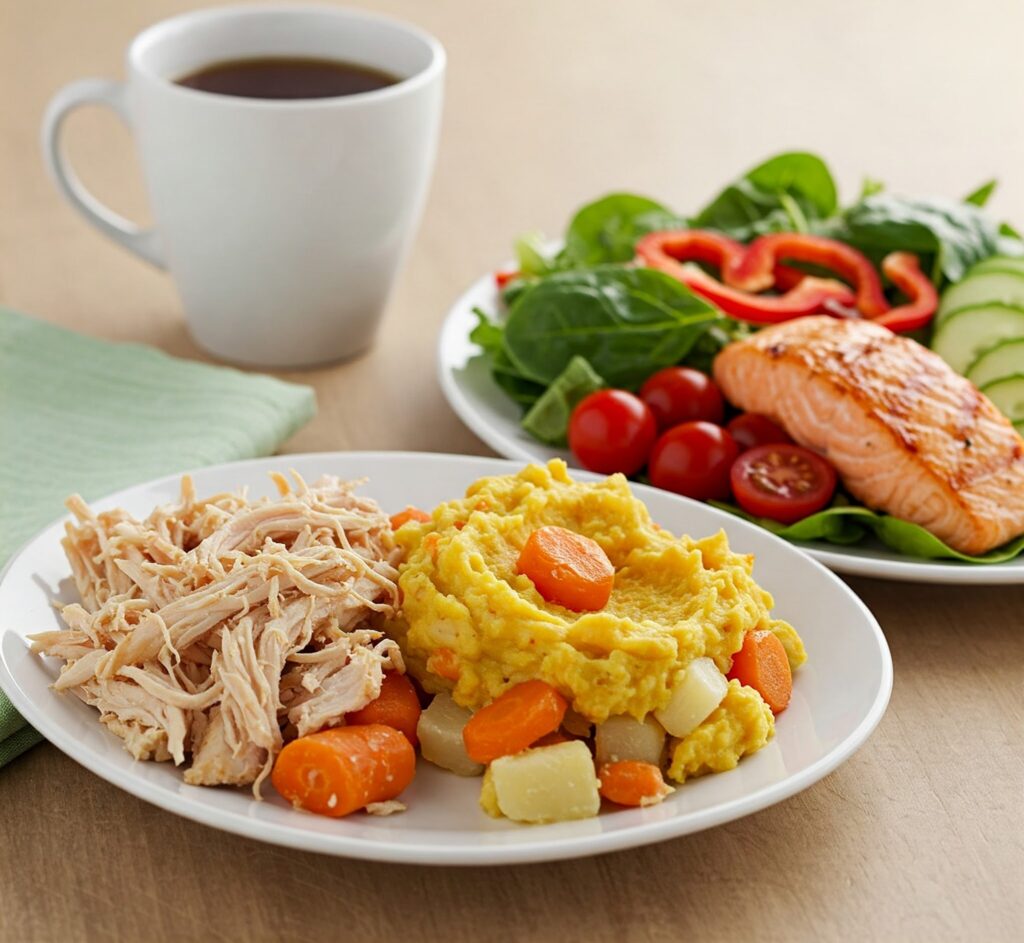
Tips for adapting to the new diet
- Chew food well: this helps digestion and avoids stomach discomfort.
- Eat small portions: stomach capacity is significantly reduced, so it is important not to overfill it.
- Fluids and meals: spread drinks between meals according to your plan to avoid feeling full too soon and to improve tolerance. Drinking during a meal does not, by itself, establish that nutrient absorption is reduced.
- Prioritise protein intake: protein helps maintain muscle mass and supports fullness.
- Listen to your body: pay attention to hunger and fullness signals to avoid overeating.
- Maintain adequate hydration: a target of around 1.5–2 litres a day is often suggested, but it is adapted to tolerance and any medical fluid restrictions.
- Continue follow-up with a specialist: a nutrition professional or doctor can adjust the diet to individual needs.
If you cannot tolerate fluids or have persistent vomiting, contact the team without waiting for your next follow-up appointment. Confusion, changes in vision or balance problems require urgent attention: thiamine deficiency is one of the possible causes.
Conclusion
Progression should follow your team's instructions, not a blog timetable. Clear liquids and full liquids have different compositions: broths and jelly alone do not provide complete nutrition. Prioritise the protein advised and continue prescribed supplements. Repeated vomiting, difficulty drinking or swallowing, and severe pain require medical assessment; do not move to a different texture in an attempt to resolve them.
https://www.instagram.com/drpauarago/
Medical review of the Spanish source: Dr Pablo Aragó Chofre, Specialist in General and Digestive Surgery.
Spanish text review date: 11 November 2026.
General information for patients; assessment and treatment recommendations are tailored to each person during the consultation.