

Obesity is a chronic disease that may be associated with type 2 diabetes, high blood pressure, sleep apnoea and other health problems. Bariatric surgery is an option for some people following individual assessment. Sleeve gastrectomy is one of the available operations.
More information about bariatric surgery
What is sleeve gastrectomy, and how does it fit into bariatric surgery?
Bariatric surgery comprises operations that can help treat obesity and improve associated conditions. Weight loss and its maintenance vary from person to person and require long-term follow-up.
Understanding obesity: a health challenge and the surgical option
Body mass index is a tool for assessing obesity, alongside associated conditions, overall health and each person's circumstances. Surgery may be an option after individual assessment. Not all criteria require the same history of previous treatments.
Sleeve gastrectomy: anatomical and metabolic changes
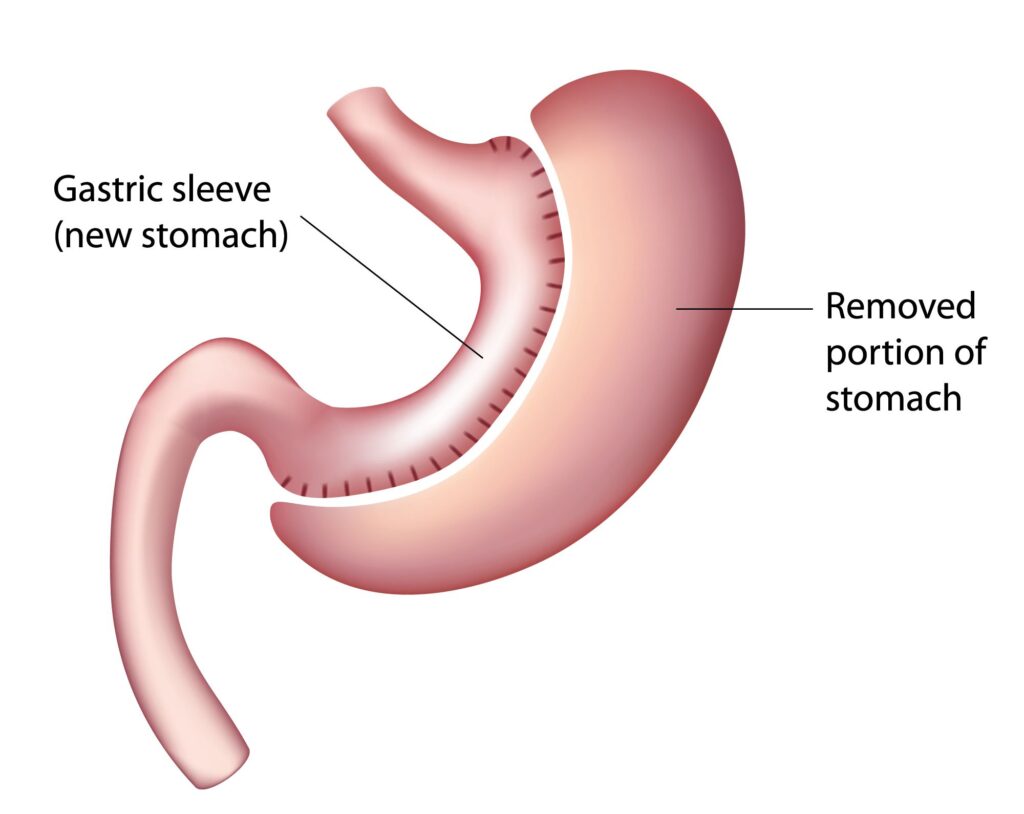
Sleeve gastrectomy removes a large part of the stomach, leaving a gastric tube. Reducing the fundus changes signals such as ghrelin, but it does not remove the ability to feel hunger. Fullness and other metabolic responses also change.
Who might sleeve gastrectomy be suitable for?
Sleeve gastrectomy is one of the bariatric surgery options. Its indication depends on individual assessment and is not determined by weight alone.
Medical indications: when is bariatric surgery recommended?
The 2022 ASMBS/IFSO recommendations include a BMI of 35 kg/m² or above, even without comorbidities, and type 2 diabetes with a BMI of 30 or above. Between 30 and 34.9, surgery may be considered if other treatments do not achieve sufficient, sustained improvement. Meeting these criteria does not establish that sleeve gastrectomy is the appropriate procedure.
Individual assessment: beyond BMI
Assessment includes medical history, eating habits, nutritional status and, where appropriate, psychological support. Before a decision is made, the changes required by treatment and the importance of long-term follow-up are explained.
Sleeve gastrectomy versus gastric bypass: understanding the differences
Sleeve gastrectomy reduces the stomach's size; gastric bypass also changes the route taken by food. Both produce digestive and metabolic changes. The choice depends on individual assessment, including associated conditions, reflux and the patient's preferences.
The sleeve gastrectomy operation: safety and technique
The operation is performed under general anaesthesia. The length of hospital stay depends on each patient's progress.
Preoperative preparation: key to the success of obesity surgery
Preparation includes clinical, nutritional and anaesthetic assessment. Cardiac, respiratory or digestive investigations are requested according to medical history. When a preoperative diet is prescribed, its aim may be to reduce liver size and fat content; it is not simply a matter of “reducing inflammation”.
The operation step by step: minimally invasive laparoscopy
Sleeve gastrectomy is usually performed laparoscopically, through small incisions used to introduce a camera and instruments. The surgeon removes part of the stomach with surgical staplers to form a gastric tube. Recovery varies according to the person, the operation and any complications.
How does sleeve gastrectomy help weight loss?
Sleeve gastrectomy helps weight loss through two main mechanisms:
- Reduced gastric capacity: the smaller stomach may help you feel full after smaller amounts of food.
- Hormonal changes: hunger, fullness and metabolic signals change. Appetite does not disappear permanently and may change during follow-up.
These changes can contribute to weight loss; responses vary and should be assessed during follow-up.
Established benefits and life after sleeve gastrectomy
The decision requires an assessment of the possible benefits and risks of sleeve gastrectomy, as well as the alternatives, according to each case.
Visible results: sustained weight loss and improvement in comorbidities
Sleeve gastrectomy may achieve substantial weight loss and improve type 2 diabetes, high blood pressure or sleep apnoea. The response and its maintenance vary. It is important to distinguish total weight loss from excess weight loss and to continue clinical checks.
As with any operation, complications such as bleeding, infection or a leak along the staple line may occur. Sleeve gastrectomy can also cause or worsen reflux. Vitamin and mineral deficiencies may develop in the long term; regular checks and supplements according to the team's plan are necessary. Repeated vomiting, difficulty drinking or swallowing, severe pain or persistent reflux should be assessed without waiting for a routine review.
Recovery and postoperative follow-up: your commitment to health
Food is gradually adapted after the operation, following the individual plan provided by the medical and nutrition team. Long-term follow-up includes clinical and nutritional checks to assess progress, adjust diet and detect possible deficiencies.
Adapting to a new way of life: nutrition and wellbeing
Sleeve gastrectomy is part of treating a chronic disease. Habits, follow-up and professional support help, but progress also depends on biological factors. Weight regain requires review and should not automatically be interpreted as personal failure.
Choosing your bariatric surgeon in Valencia: experience and trust
The team's experience, individual assessment and continuity of follow-up are important when choosing where to receive treatment.
The importance of a specialist bariatric surgery team
Bariatric care may include surgery, endocrinology, nutrition, psychology and nursing, according to each person's needs, before and after the operation.
Bariatric surgery assessment at IMED
The consultation reviews medical history, previous treatments and available options. Dr. Pablo Aragó assesses patients for bariatric surgery and explains the indication, risks and follow-up individually.
Request an information consultation
You can request an assessment with Dr. Pablo Aragó at IMED Valencia (Burjassot), Colón or Gandía. The consultation will review your case, sleeve gastrectomy and other options, their risks and follow-up. Appointment availability must be confirmed with the centre.
Related video
This content is hosted on YouTube. The player remains disabled until you choose to load it.
When you enable it, YouTube receives connection data and may use cookies or similar technologies to provide the service, measure its use and personalise content or advertising. Read YouTube's privacy information.
- Accept and load YouTube
- Keep disabled
- Disable YouTube
Open on YouTube (external site)
Your choice is not saved. Until you enable it, this block does not load resources from the provider.
You can use the external link to access the content.
IMED Valencia
Av. de la Ilustración, 1, 46100, Burjassot. Valencia
IMED Colón
C/ Isabel La Católica, 12. 46004 València
IMED Gandía
Carrer Ciutat de Barcelona, 29. 46702 Gandia, Valencia
https://www.instagram.com/drpauarago/
Medical review of the Spanish source: Dr. Pablo Aragó Chofre, specialist in General and Digestive Surgery. Spanish source review date: 11 November 2026. General information for patients; assessment and indications are individualised during consultation.
Medical sources: ASMBS: bariatric surgery procedures · ASMBS: indications for surgery.